
“The student’s learning about teaching, gained from a limited vantage point and relying heavily on imagination, is not like that of an apprentice and does not represent acquisition of the occupation’s technical knowledge. It is more a matter of imitation, which, being generalised across individuals, becomes tradition.” (Lortie, 1975, p. 63)
The move from teaching physical education to teaching teachers of physical education has been challenging, as it is filled with unique dilemmas and problems. Key amongst them, that I continue to grapple with, is that learning to teach requires the novice teacher to first understand teaching in ways that are significantly different from their own experiences of being pupil at school. As Pam Grossman and Mary Kennedy point out the average person would have spent around 12 to 13 thousand hours in direct contact with teachers; watching them, interacting with them and learning from them. As children and young people, we see teachers at work way more extensively than any other professional group. No wonder then that this experience leads to widespread and resilient beliefs of what teaching is, that teaching is simple and learning to teach is easy. This problem is what Dan Lortie calls the apprenticeship of observation.
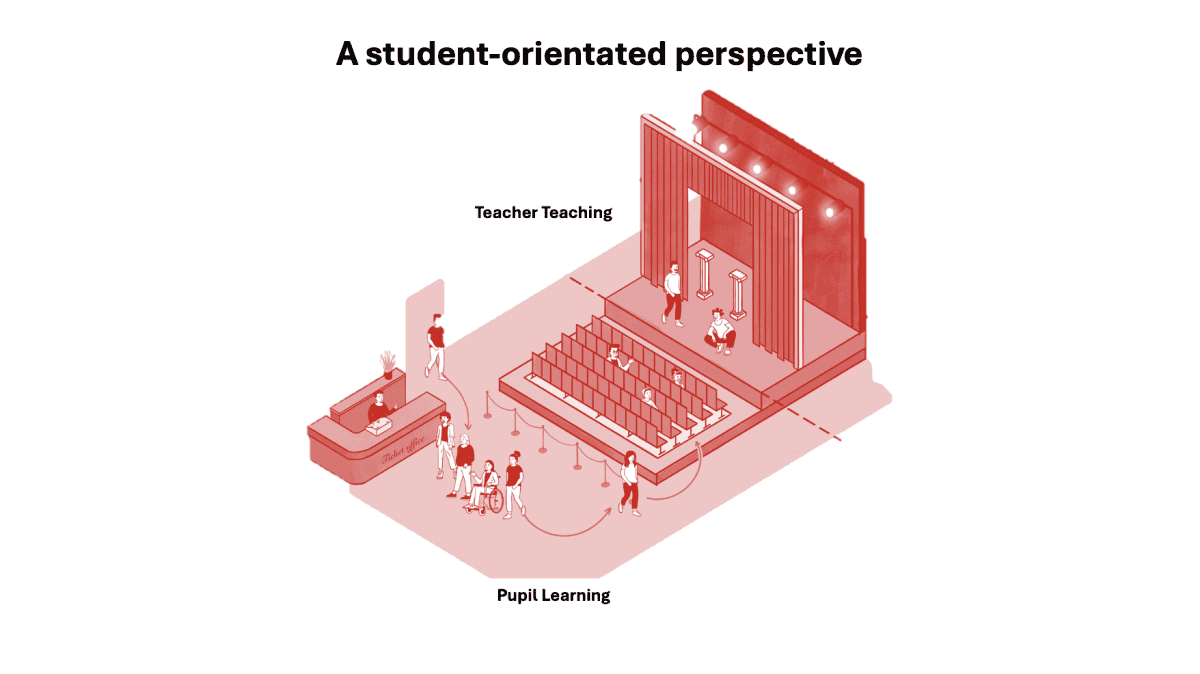
This apprenticeship of observation comes with major limitations according to Lortie and he uses the analogy of a play to explain them. When we are a pupil at school we view the teacher like an audience views a play. The play is being put on for our benefit and we judge it based on our own personal preferences, some which might be aligned with the aims of the teacher, but many more are down to our own personal likes and dislikes. However this means much of what we learn about teaching is from front-stage only. This is a student-oriented perspective, which is a limited vantage point.
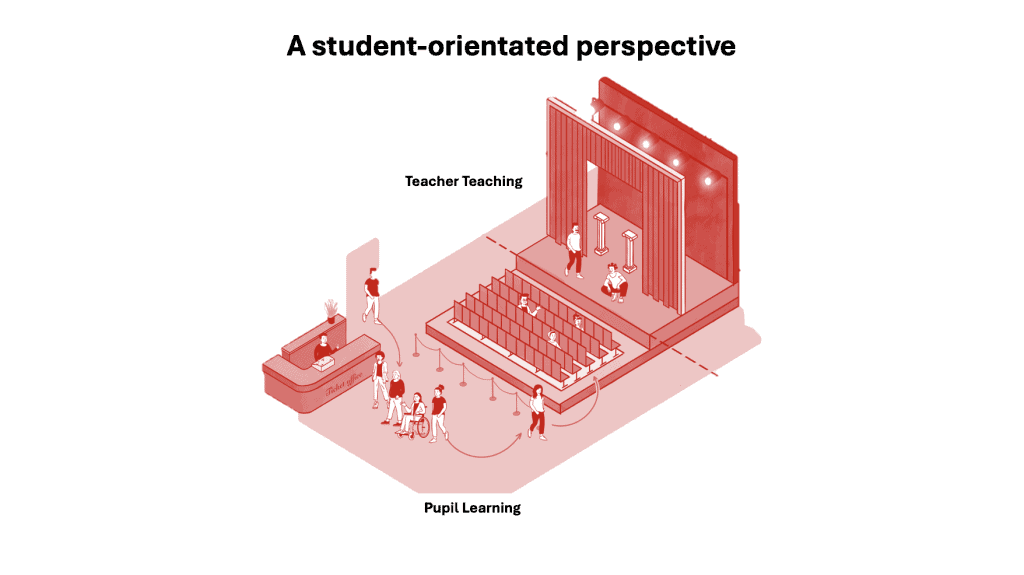
Lortie continues his analogy to further highlight the issues. As a pupil we are not invited to view our teachers work from the wings. We are unable to be analytical about their teaching performance, as we do not have the explicit knowledge, language and concepts need to move from a student-oriented perspective to a pedagogically oriented one. As Lortie states on page 62 “What students learn about teaching, then, is intuitive and imitative rather than explicit and analytical; it is based on individual personalities rather than pedagogical principles.” As a pupil we are not privy to the intentions of our teachers, before, during and after the performances we get to witness. We do not get to set learning objectives, have to deal with multiple conflicting dilemmas that occur in the act of teaching 30 young people and responding to them, then judging the effectiveness of our professional judgement and decision making process.
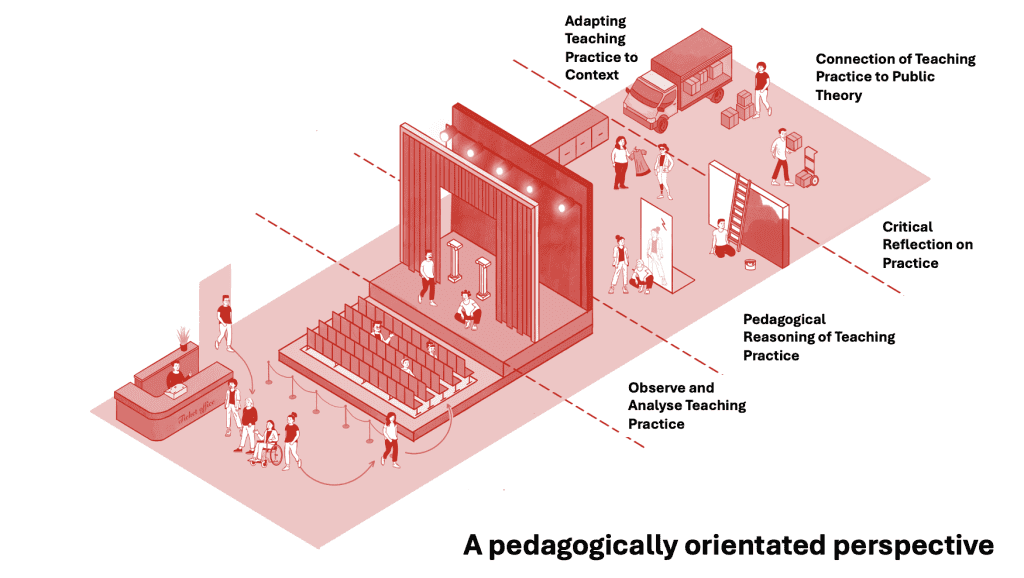
Therefore part of a successful induction of novices into teaching requires me to invite them into the wings to inquire, analyse, reflect and practice through a pedagogically oriented perspective. This would require me to address several elements in my own practice: 1) I would need to perform for them. 2) I would need to provide them with a shared language and viewing frame so that my performance (and their own and others) can be observed and analysed. 3) I would need to open up my pedagogical reasoning to them and make explicit about the why(s), what(s), when(s) and how(s) of my professional judgement and decision making. 4) I would need them to join with me in learning how to professional critique both my teaching performance and pedagogical reasoning. 5) I would need to link my teaching performance and reasoning to established theories, research and evidence and highlight the links. Finally 6) I would need to help them adapt and refine (not imitate) my practice to their context, if they judge it to be suitable and effective.
The problem of the apprenticeship of observation is a significant challenge for those who work with novice PE teachers and are responsible for inducting them into the profession. This is because the teaching behaviours that novice teachers have seen, even in teacher education, are often left unexamined and unanalysed. Therefore they are often imitated, especially in moments of challenge and uncertainty (of which teaching is full of, especially for novices.) This needs to be disrupted by finding out what beliefs and ideas novices bring with them, helping them to articulate them in richer ways, then disrupting, developing and deepening them through a responsive pedagogy of teacher education.